
The global games market has officially entered a new era of high-stakes evolution, surpassing $201.6 billion in total revenue by 2025 while simultaneously navigating one of the most intense technical and cultural shifts in its history. As we move through mid-2026, the industry is no longer just grappling with post-pandemic normalization; it is actively restructuring around generative AI, shifting hardware cycles, and a player base that is increasingly consolidated within a handful of massive, legacy franchises despite a flood of high-quality new releases.
How is the Global Games Market Performing in 2026?
The industry has reached a massive milestone, with the global market cracking the $200 billion ceiling, but growth is now heavily concentrated in the PC segment rather than mobile or console. While mobile remains the largest revenue driver globally, PC gaming saw record expansion in 2025 and 2026, offsetting a slight contraction in the console market as players wait for mid-generation hardware refreshes like the Nintendo Switch 2 and the rumored PS5 Pro iterations.
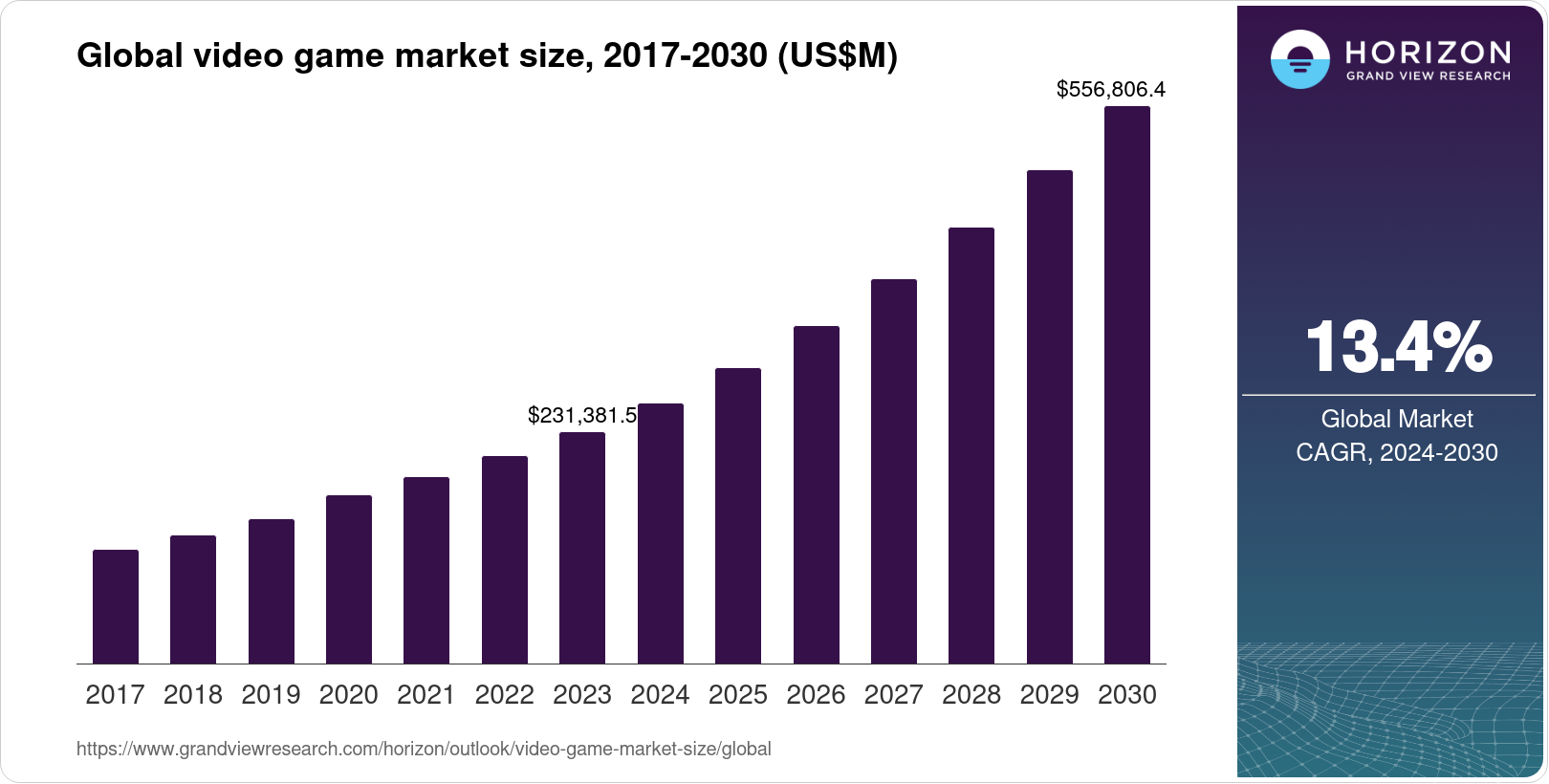
A significant driver of this shift is the cross-platform nature of modern social hubs. Players are no longer tethered to a single device; instead, they migrate between mobile for quick sessions and PC/console for high-fidelity immersion. This behavioral shift has forced publishers to rethink their launch strategies, often prioritizing simultaneous PC releases for titles that were previously console exclusives.
According to the Newzoo 2026 PC & Console Gaming Report, overall playtime has remained remarkably stable, but the distribution of that time is ruthless. Top-tier franchises like Roblox, Fortnite, and Minecraft continue to command over half of all total playtime on PC and console. This concentration creates a "winner-take-all" landscape where new AAA and indie titles must compete against decades of accumulated content and social ecosystems. In 2026, a new game's biggest competitor isn't just other new releases, but the literal thousands of hours players have already invested in their digital identities within existing live-service worlds.
Why are Developers Skeptical of Generative AI?
Developer sentiment toward AI has reached a tipping point, with 52% of game professionals reporting that generative AI is actively harming the industry in 2026. This is a dramatic increase from the 30% reported just a year ago, reflecting deep-seated fears over job security, intellectual property theft, and the "infrastructure problem" of integrating these tools into massive, existing pipelines.
The skepticism isn't just about labor replacement; it's about the technical instability these tools introduce. Large-scale game production relies on predictive, stable workflows. Integrating "black box" generative models into these pipelines often creates more bugs than it resolves, leading to what industry analysts call the "technical debt of automation." Developers are finding that while AI can generate thousands of assets, the human time required to curate, fix, and optimize those assets often negates the anticipated efficiency gains.
Data from the GDC 2026 State of the Game Industry Report reveals that only 7% of developers view the impact of generative AI as positive. The divide has sharpened between "productivity AI"—used for repetitive tasks like bug tracking or localization—and "creative AI," which many fear will erode the unique artistry of level design and asset creation. While the GDC Trends Report 2026 highlights AI as a top industry trend, it also notes that developers are facing significant hurdles in securing funding and publishing partnerships as investors demand more efficiency without clear ethical safeguards. This has led to a stagnant middle-market where developers are too large to be nimble but too small to afford the R&D required to master these new tools safely.
What are the Major Release Dates for 2026?
The 2026 release calendar is exceptionally dense, featuring a mix of major AAA sequels, highly anticipated remakes, and breakthrough indie titles across all major platforms. The Summer 2026 schedule is particularly packed, signaling a strong second half for the year as developers target the launch window of new hardware. This density is partly due to the "delay debt" of the mid-2020s, where projects pushed back by supply chain and economic shifts are finally coming to fruition simultaneously.
Game Title | Release Date | Key Platforms | Lead Engine |
|---|---|---|---|
Gothic 1 Remake | June 5, 2026 | PC, PS5, Xbox | Unreal Engine 5 |
007 First Light | May 27, 2026 | PS5, Xbox, PC, Switch 2 | Glacier Engine |
Star Fox Remake | June 25, 2026 | Switch 2 | Proprietary |
The Blood of Dawnwalker | September 3, 2026 | PS5, Xbox, PC | Unreal Engine 5 |
Control Resonant | September 24, 2026 | PS5, Xbox, PC | Northlight Engine |
Resident Evil Requiem | February 27, 2026 | PC, PS5, Xbox | RE Engine |
Beyond these heavy hitters, the indie scene is seeing significant movement. Paralives, the highly anticipated life simulation competitor to The Sims, is slated for a May 25, 2026 release on PC. This year also marks a major milestone for Nintendo fans, with the Switch 2 reportedly driving a year-on-year increase in physical game spending for the first time since 2009. The success of these releases is increasingly tied to "engagement loops" rather than just initial sales; developers are now building games with the expectation that players will remain active for 2–3 years through mid-tier DLC and seasonal updates, rather than moving on to the next title immediately.
This shift toward long-term engagement has created a bifurcation in the market. "Event games" like those in the table above must now compete for a finite amount of player time that is already pledged to existing habit-forming titles. In 2026, the marketing budget for a game often equals or exceeds its development cost, as breaking through the "noise floor" of established live services requires unprecedented visibility.
How is Game Development Culture Changing?
Industry culture in 2026 is defined by a "reset" mentality following several years of aggressive layoffs. The GDC State of the Industry survey indicates that 28% of developers have been laid off in the past two years, a figure that jumps to 33% within the United States. This instability has led to a surge in interest in unionization and a shift toward co-development and outsourcing as studios try to bridge the gap between ambitious scopes and limited budgets.
This professional precarity has also birthed a new wave of "micro-studios." Experienced developers who were laid off from major publishers are increasingly forming lean, collaborative teams of 5–10 people. These teams are leveraging the power of modern engines to produce "AA" quality work without the overhead of a thousand-person studio. This "indie-plus" movement is becoming the lifeblood of game innovation in 2026, often taking creative risks that publicly traded giants can no longer afford.
Developers are also facing an "infrastructure problem" where the tools to build modern games are becoming increasingly complex. In 2026, Unreal Engine remains the dominant choice, with 42% of developers utilizing it as their primary engine, followed by Unity at 30%. The move toward Unity 6 and Unreal Engine 5 is now nearly universal for AAA production, as older proprietary technologies struggle to keep pace with the fidelity demands of current-gen hardware. This standardization helps with developer mobility but creates a monoculture where many games begin to share a recognizable "visual language," making aesthetic differentiation a new and difficult frontier.
While the industry's financials are strong, the path forward requires resolving the tension between technological automation and creative labor. The Newzoo Global Gaming Report 2025 correctly predicted that the player base would reach 3.6 billion, but the challenge for the next three years (2026–2028) will be monetization.
The industry is currently moving away from aggressive, predatory monetization toward "value-driven" systems. Players in 2026 are increasingly resistant to gacha mechanics and paid power-ups, instead favoring cosmetic-only battle passes and substantive story expansions. This shift is a direct response to the "forever game" fatigue; if a player is going to play only one or two games a year, they demand a higher standard of respect for their time and money.
As players spend more time in a smaller number of "forever games," the cost of acquiring a new player has skyrocketed. This is driving the "dual monetization" trend seen in the mobile market—where games use both advertising and in-app purchases—to migrate increasingly into PC and console environments. For the average player, 2026 offers a golden age of content, but for the professionals making it, the year is a rigorous test of sustainability and a search for a more equitable way to build the virtual worlds of the future. The transition from growth-at-all-costs to sustainable-ecosystem-management is the defining journey of the current decade.
What is the Long-Term Outlook for the Gaming Ecosystem?
While the industry's financials are strong, the path forward requires resolving the tension between technological automation and creative labor. The Newzoo Global Gaming Report 2025 correctly predicted that the player base would reach 3.6 billion, but the challenge for the next three years (2026–2028) will be monetization.
As players spend more time in a smaller number of "forever games," the cost of acquiring a new player has skyrocketed. This is driving the "dual monetization" trend seen in the mobile market—where games use both advertising and in-app purchases—to migrate increasingly into PC and console environments. For the average player, 2026 offers a golden age of content, but for the professionals making it, the year is a rigorous test of sustainability.
Frequently Asked Questions
Is the Nintendo Switch 2 officially out in 2026?
Yes, current market reports and release calendars for 2026 confirm that the Switch 2 is a primary platform for major summer and fall releases, including titles like 007 First Light and the Star Fox Remake.
Which games have the highest playtime in 2026?
Legacy franchises continue to dominate. Per InvestGame analyst data, Roblox was the most played franchise in 2025 and early 2026, commanding a significant lead over newer titles.
Are game prices increasing further this year?
The industry is currently facing a $80 price ceiling dilemma. While some publishers have pushed flagship titles toward the $79.99 mark, developers are cautious that this may be exceeding the "price ceiling" for many consumers during the current economic climate.


No comments yet. Be the first to share your thoughts!